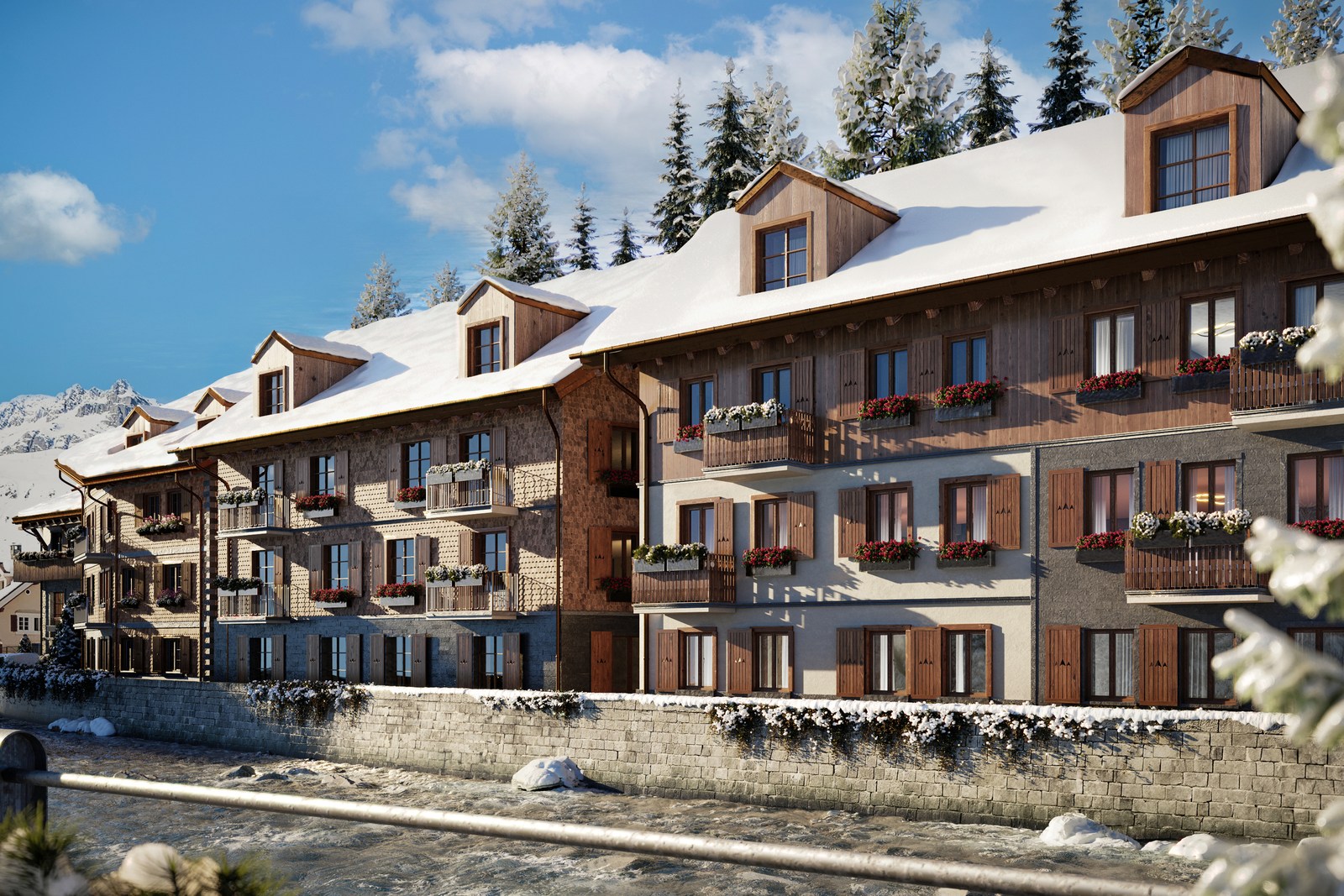
Developments
The Alps' most protected address — where a rare federal exemption lets international buyers own freehold in the Andermatt Swiss Alps resort, free of the permit and quota that restrict foreign purchase everywhere else in Switzerland.
Foreign buyers are normally barred from Swiss residential property by the Lex Koller law. The Andermatt Swiss Alps resort holds a federal exemption — in force to 31 December 2040 (time-limited, not “permanent”) — letting foreigners buy and resell freehold without a permit or quota. Confirm any specific building sits inside the exempt perimeter before committing.
Prices are set in Swiss francs, one of the world's hardest currencies and a store of value that has strengthened against the euro, dollar and pound over decades.
Canton Uri charges no property transfer tax and no annual real-estate tax, and is a low-tax canton for wealth — keeping both entry and holding costs down.
Second homes are capped across Switzerland and alpine building land is tightly limited, so the supply of new luxury residences is structurally scarce.
Swiss prime alpine is a store-of-value market, not a high-yield one: franc strength and structural scarcity underpin values, while gross rental yields are typically a modest 2–3%. Andermatt has re-rated since the Andermatt Swiss Alps resort launched, but treat past growth as history, not a forecast.
What buying and owning here actually costs you.
Canton Uri levies no property transfer tax, so buying is unusually light on cost — typically 1–2% in notary and land-registry fees, and there is no annual real-estate tax either. Prices, mortgages and costs are all denominated in Swiss francs, so a foreign buyer carries currency risk both ways.
Owners are taxed on a notional “imputed rental value” as income until the end of 2028; from 1 January 2029 this is abolished for both main and second homes, though most mortgage-interest and maintenance deductions fall away and cantons may add an object tax on second homes. Resale carries a property-gains tax that tapers the longer you hold. Buying confers no Swiss residence right — there is no golden visa.
Figures are indicative guidance compiled from public sources, not tax advice — confirm your position with a qualified adviser.
What investors ask us most about this market.
Usually not freely. The federal Lex Koller law bars most non-resident foreigners from buying Swiss residential property, allowing only holiday homes in designated tourist zones under a capped national quota (around 1,500 permits a year, now being reduced), limited to roughly 200 m² and personal use. The main exception is the Andermatt Swiss Alps resort, which holds a federal exemption letting foreigners buy and resell freehold without a permit or quota. Because the exemption is tied to a defined perimeter, confirm that any specific building sits inside it before committing.
No. It was granted by the Federal Council in 2006, originally to the end of 2030, and extended in 2021 to 31 December 2040. It is time-limited, so treat any marketing that calls it “permanent” as inaccurate. How resale to foreigners will be treated after 2040 is not yet settled, and Swiss federal law on foreign ownership is currently being tightened.
No. There is no golden visa and no residency-by-investment; ownership and immigration status are entirely separate, and a non-resident buyer remains a visitor under the Schengen 90/180-day limit. Wealthy foreigners who want to live in Switzerland use the separate lump-sum taxation (forfait) route, which is a negotiated tax-residence arrangement and nothing to do with owning a particular home.
Canton Uri is unusually light. It levies no property transfer tax, so total purchase costs are typically just 1–2% in notary and land-registry fees, and there is no annual real-estate tax. Uri is also a low-tax canton for wealth. Everything is priced in Swiss francs, so a foreign buyer takes on currency risk. This is general information, not tax advice — take Swiss advice on your own position.
Owners are currently taxed on a notional “imputed rental value” (Eigenmietwert) as income, with mortgage interest and maintenance deductible. Switzerland voted in September 2025 to abolish this, and it will end on 1 January 2029 for both main and second homes — but most of those deductions fall away too, and cantons may introduce an object tax on second homes to replace the lost revenue.
Switzerland taxes property gains through a cantonal Grundstückgewinnsteuer that tapers with how long you hold: it is highest on a quick flip and falls the longer you own, down to a floor after roughly twenty years. Confirm the exact Uri schedule with the cantonal tax office, as published rates vary by source.
Swiss prime alpine property is a store-of-value market, not a high-yield one. Gross rental yields are typically a modest 2–3%, and capital growth is stable rather than rapid; part of the return for a foreign buyer is simply the strength of the Swiss franc. Any fixed “guaranteed” return offered by a developer is a time-limited contractual top-up, only as reliable as the developer behind it — read the terms.
Share your details and a private advisor will send the full market & tax briefing within 24 hours.